
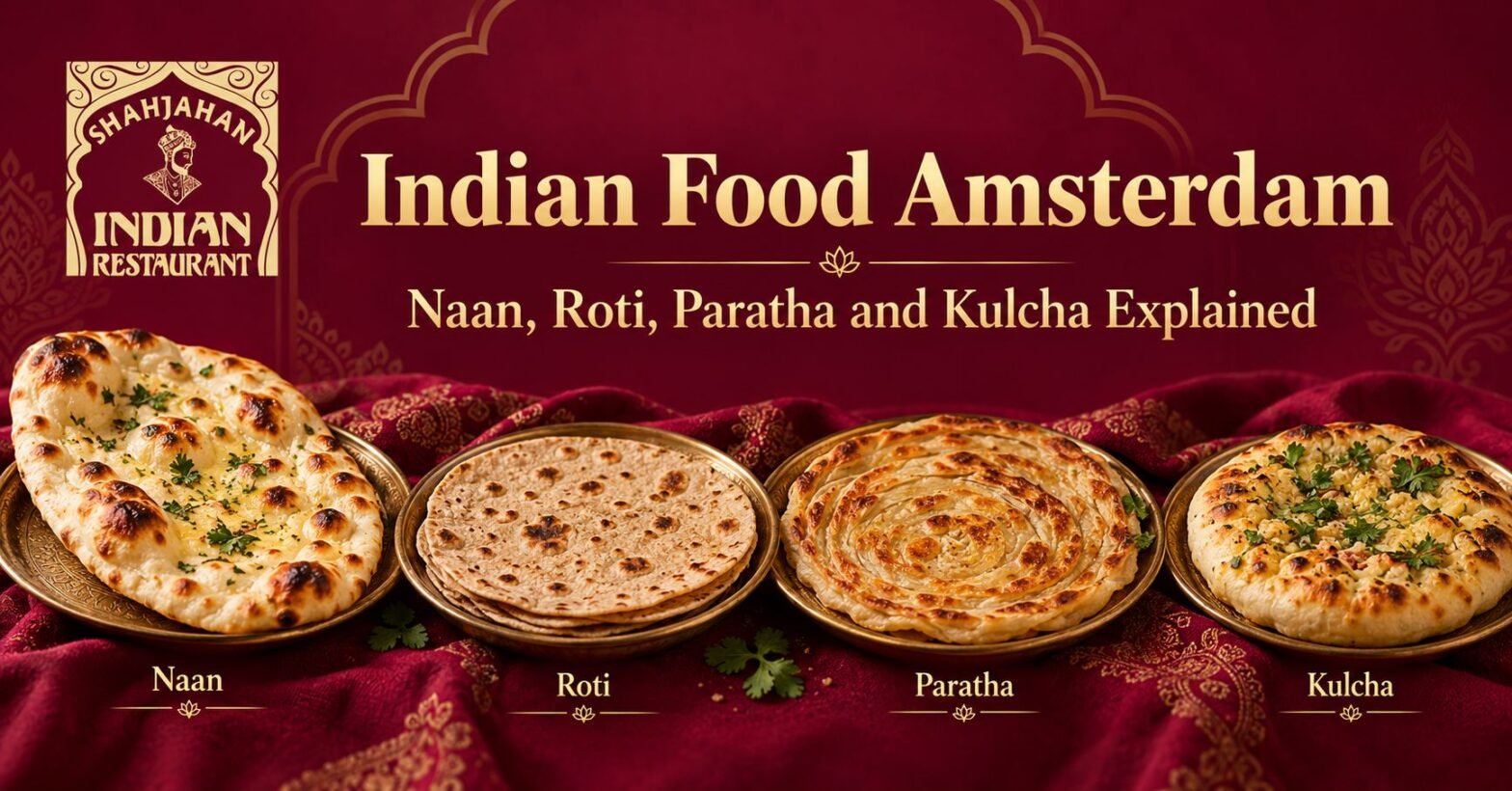
If you have ever sat down for Indian food in Amsterdam, you probably know the moment. The curry is chosen, the drinks are on their way, and then you reach the bread section of the menu. Naan, roti, paratha, kulcha. They all look like flatbread, so does it really matter which one you pick?
It does. Each bread uses a different flour, rises (or does not rise) in a different way and is cooked on a different piece of equipment. Those small differences change the texture, the flavour and which dishes they suit best. This guide walks you through all four, explains how to pair them with your curry and shows you where to try bread fresh from the tandoor in the Jordaan.
Why Bread Matters So Much in North Indian Food
In much of North India, bread is not a side dish. It is the spoon. People tear off a piece, fold it into a small scoop and use it to pick up curry, dal or vegetables.
North Indian kitchens rely on two main cooking tools for bread. According to Encyclopaedia Britannica, a flat griddle is used for breads such as roti, while the tandoor, a cylindrical coal-fired oven, is used for flatbreads such as naan and kulcha. In rural Punjab the tandoor has long been treated as a social institution, with a single oven shared by the whole community.
Once you know which bread comes from which tool, the menu starts to make a lot more sense.
Naan: The Tandoor Favourite
Naan is the bread most visitors recognise. It is a leavened flatbread, which means the dough is left to rise before cooking, and it is usually made with yeast. The dough is shaped, flattened and pressed onto the inside wall of a tandoor, where temperatures can reach around 480°C. That fierce heat is what gives naan its puffed body, blistered spots and slightly smoky edge.
Interestingly, naan was not always an everyday bread. The baking team at King Arthur Baking points out that naan has traditionally been seen as something special, while simple wholewheat breads like roti and chapati are the true daily staples of the South Asian home.
Naan at Shah Jahan: our plain naan is baked in the tandoor, and it comes with every one of our set menus. Guests also order garlic naan, cheese naan, onion naan and Peshwari naan.
Best with: rich, saucy dishes such as butter chicken, chicken tikka masala, korma and paneer makhani. The soft middle soaks up the sauce and the crisp edges hold their shape.
Roti: The Everyday Wholewheat Flatbread
Roti is the bread many Indian families eat every single day. It is a round flatbread made from atta, a stoneground wholewheat flour, mixed with water into a simple dough. Roti is unleavened, so there is no yeast and no rising time. It is traditionally cooked on a tawa, a flat or slightly curved iron griddle.
Compared with naan, roti is thinner, lighter and less rich. It has a gentle, nutty wheat flavour that lets the curry take centre stage. You may also see tandoori roti on menus, which is a wholewheat flatbread baked in the tandoor instead of on the griddle.
Best with: dal, vegetable curries, saag and other lighter dishes where you want the bread to support the flavours rather than compete with them.
Paratha: Layered, Flaky and Buttery
If roti is the everyday bread, paratha is its more indulgent cousin. A paratha starts with a wholewheat dough that is folded and rolled with ghee to build up multiple layers, then shallow fried until golden. The result is a bread that is crisp on the outside, soft inside and flaky enough to peel apart.
The name is often explained as a mix of “parat” (layer) and “atta” (flour), which neatly sums up what makes it special. Parathas can be plain or stuffed. One of the best loved versions is aloo paratha, filled with spiced potato and usually served with butter, chutney, yoghurt or Indian pickle.
Paratha at Shah Jahan: aloo paratha is on our menu, and several diners have recommended our parathas in their reviews. any other paratha varieties, e.g. plain or lachha]
Best with: paneer dishes, dry tandoori starters and a bowl of cucumber raita. An aloo paratha is filling enough to share as a starter.
Kulcha: Punjab’s Soft and Stuffed Bread
Kulcha is less familiar outside India, but it deserves a place on your table. The word comes from a Persian term for a disc-shaped loaf of leavened bread, and the bread is closely linked to Punjab. It is usually made with maida, a refined white wheat flour, which gives it a softer, more tender crumb than roti.
Where naan is normally raised with yeast, many kulcha recipes use yoghurt, baking powder or baking soda instead. The most famous style is the Amritsari kulcha, stuffed with potato, onion and spices such as cumin and dried pomegranate seed, then baked in the tandoor until crisp. In Punjab it is classically eaten with spiced chickpeas, a pairing known as chole kulcha.
Kulcha at Shah Jahan: is kulcha on the menu? If not, suggest our stuffed naans as the closest alternative
Best with: chana masala or other chickpea curries, and dal makhani.
Naan vs Roti vs Paratha vs Kulcha at a Glance
| Bread | Flour | Leavened? | Cooked in | Texture | Best with |
| Naan | Refined white flour | Yes, usually yeast | Tandoor | Soft, puffy, charred spots | Creamy curries like butter chicken |
| Roti | Wholewheat (atta) | No | Tawa (griddle) or tandoor | Thin, light, soft | Dal and vegetable dishes |
| Paratha | Wholewheat (atta) with ghee | No | Tawa, shallow fried | Flaky, layered, buttery | Paneer dishes and raita |
| Kulcha | Refined flour (maida) | Yes, often yoghurt or baking powder | Tandoor or tawa | Soft, often stuffed | Chickpea curries |
How to Pair Indian Bread With Your Curry
There are no strict rules, but a few simple pairings will get the most out of your meal:
- Rich, creamy sauces: go for plain or garlic naan. The fluffy texture is made for mopping up sauce.
- Lentils and vegetables: choose roti. It keeps things light and lets the spices shine.
- Dry dishes and grills: a paratha adds richness to tandoori starters and kebabs.
- Chickpea curries: kulcha is the traditional Punjabi match.
- Feeling adventurous? Order two or three different breads for the table and compare them side by side.
Where to Try Fresh Tandoor Bread: Indian Food Amsterdam at Shah Jahan
The best way to understand the difference between these breads is to taste them fresh. At Shah Jahan, our family-owned Indian restaurant has been serving the neighbourhood for over 20 years from Eerste Anjeliersdwarsstraat 18, in the heart of the Jordaan.
Our naan is shaped by hand and baked in the tandoor, and our menu covers vegetarian, vegan and meat dishes, from classic curries to tandoori specialities. Most dishes can be made mild or properly hot, depending on how you like your spice, and our staff are happy to help with dietary requirements.
Prefer to eat at home? We offer takeaway and delivery, and you can also order through Thuisbezorgd.
- Address: Eerste Anjeliersdwarsstraat 18, 1015 NR Amsterdam
- Phone: 020 624 0122
Book your table and tell us which bread you would like to try first.
Frequently Asked Questions
What is the difference between naan and roti?
Naan is a leavened bread, usually made with refined flour and yeast and baked in a tandoor. Roti is unleavened, made with wholewheat atta flour and cooked on a flat griddle called a tawa. Naan is softer and richer, while roti is thinner and lighter.
Is paratha the same as roti?
No. Both use wholewheat flour, but paratha dough is folded with ghee to create layers and then shallow fried. This makes paratha flaky and buttery, while roti is plain and soft.
What is the difference between naan and kulcha?
Both are soft white-flour breads that can be baked in a tandoor. Naan is usually raised with yeast, while kulcha is often raised with yoghurt or baking powder. Kulcha is also frequently stuffed, most famously with spiced potato in the Amritsari style.
Is naan suitable for vegans?
Naan is often made with dairy such as yoghurt, butter or ghee, so it is not always vegan. Ask our team when you order and we will point you to the right options.
Can I order garlic naan for delivery in Amsterdam?
Yes. Shah Jahan offers takeaway and delivery, and you can order from us on Thuisbezorgd.
Final Thoughts
Naan, roti, paratha and kulcha may all be flatbreads, but each one brings something different to the table. Naan is soft and indulgent, roti is light and everyday, paratha is flaky and buttery, and kulcha is the soft, stuffed pride of Punjab. The next time you are looking for Indian food in Amsterdam, skip the default order and try something new with your curry. We will have the tandoor ready.